


Ajay Talwar
Night Sky Photographer
It has been more than 25 years that I have been photographing the night skies. I do remember the first instance. Although I have lost the slide, but I still remember it vividly. I had gone to a place called Nebsarai on the outskirts of Delhi. I had exposed an entire film that night in 1987. The slide film had 36 frames, but just a couple of frames had stars visible in them. The shop where I got the film developed had almost thrown the film in the bin, because he did not find the film exposed at all! There was, but one frame, which was loaded with stars, Omega Centauri cluster was clearly visible! I was really happy. That was my impetus, my drive to continue astrophotography till now. Over a period of time I developed a warm relation with astrophotography. As the results got better, I wanted to do more and more astrophotography.
Neelam Talwar
Night Sky Photographer
I am an Air Crew with our national carrier, Air India, since 1993. All these years I have been managing odd hour flights which traverse many time zones across the Earth. Its difficult to comprehend that you have taken off from New Delhi at the unearthly hour of 2am on a 15 hour long flight, and when you land at New York its only 7am and dawn is just breaking there. As crew it is must to have knowledge of the entire aircraft, seat locations, variety of emergency information, situations of medical kind, drunk air rage kind, and now the pandemic kind too, all this while navigating the narrow aisles of three different kinds of aircraft.
Once on ground though, we get to visit new cities, new places, new kinds of English language! A waiter at a Chennai restaurant asks you ” Parcel?” and the server in New York asks you “To Stay or to Go?” means the same thing. As crew we are constantly exploring the cultures of the places that we frequent. New York is completely ‘ON’ and moving at 8 in the morning with everything working. While several cities in Europe are completely ‘OFF’ at 3pm, with everything closed. As crew we get to know the streets, locations and interesting neighbourhoods. Walking around, getting lost, is my favourite pastime. Now in the recent years, astrophotography at various locations has become a passion, be it the top of Empire State Building, The Tower in Sydney, Lake Como or the Golden Gate Bridge.
The day is over, is a peaceful calm night at home, and I find relaxation in baking something new. Baking soothes my hungry soul by imbibing a little creative energy in me. The boys enjoy my baking, and my obsession is fulfilled.
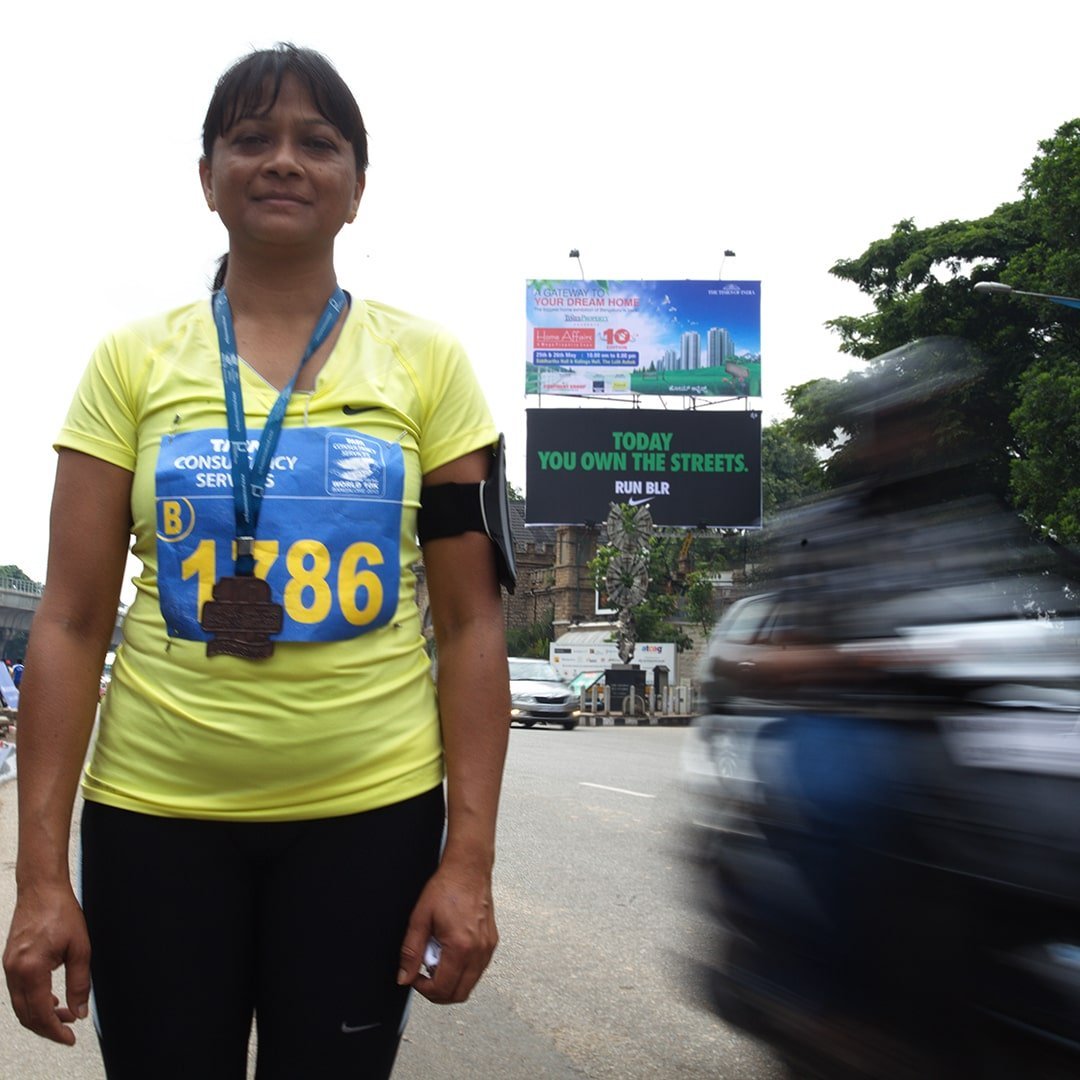
I am passionate about running. Short runs, daily runs, night runs and marathons. I feel happy that I have participated in marathons of many different cities Delhi, Bengaluru, Mumbai. I also ran marathon in New York, women’s day run in San Francisco. Above all I am really proud of completing the Ladakh Marathon. The running scene is completely different in western countries. People give way, your running attire does not matter and the weather is really conducive to running. I enjoy my runs in Central Park , New York and along the San Francisco Bay. For me, nothing come close to the feeling of elation that comes from the extra blood pumped by the heart, the joy, the satisfaction of crossing the finishing line. The pandemic has been good for my running. I could run virtual marathons viz. Berlin, New York, London, right here in Gurgaon. During the pandemic exercising, yoga, intermittent fasting has worked wonders for me. The Pandemic has also given me regular enriching family time .
While flying is exploring, baking is fun and running a marathon is satisfying, photographing the night sky is adventurous. As a crew I fly to various cities. Cities with monuments, wondrous locations. Photographing the night sky from these locations requires a lot of planning. Daytime is spent getting over the jet-lag, time difference. As tourists, people visit the places only superficially, but as crew, a photographer, I know the streets, the layout, bye lanes, vantage points intimately. Before sunset I reach the spot, scout around, find my shooting place, setup my camera and am ready to start clicking at the stars start to appear in the sky. In recent times I have started to shoot the night sky from a plane window on my flight duties. There are many interesting phenomena that can be observed and photographed when you are flying over the Earth.
Neelam Talwar (September 2021)
Neelam Talwar
Night Sky Photographer
I am an Air Crew with our national carrier, Air India, since 1993. All these years I have been managing odd hour flights which traverse many time zones across the Earth. Its difficult to comprehend that you have taken off from New Delhi at the unearthly hour of 2am on a 15 hour long flight, and when you land at New York its only 7am and dawn is just breaking there. As crew it is must to have knowledge of the entire aircraft, seat locations, variety of emergency information, situations of medical kind, drunk air rage kind, and now the pandemic kind too, all this while navigating the narrow aisles of three different kinds of aircraft.
Once on ground though, we get to visit new cities, new places, new kinds of English language! A waiter at a Chennai restaurant asks you ” Parcel?” and the server in New York asks you “To Stay or to Go?” means the same thing. As crew we are constantly exploring the cultures of the places that we frequent. New York is completely ‘ON’ and moving at 8 in the morning with everything working. While several cities in Europe are completely ‘OFF’ at 3pm, with everything closed. As crew we get to know the streets, locations and interesting neighbourhoods. Walking around, getting lost, is my favourite pastime. Now in the recent years, astrophotography at various locations has become a passion, be it the top of Empire State Building, The Tower in Sydney, Lake Como or the Golden Gate Bridge.
The day is over, is a peaceful calm night at home, and I find relaxation in baking something new. Baking soothes my hungry soul by imbibing a little creative energy in me. The boys enjoy my baking, and my obsession is fulfilled.
I am passionate about running. Short runs, daily runs, night runs and marathons. I feel happy that I have participated in marathons of many different cities Delhi, Bengaluru, Mumbai. I also ran marathon in New York, women’s day run in San Francisco. Above all I am really proud of completing the Ladakh Marathon. The running scene is completely different in western countries. People give way, your running attire does not matter and the weather is really conducive to running. I enjoy my runs in Central Park , New York and along the San Francisco Bay. For me, nothing come close to the feeling of elation that comes from the extra blood pumped by the heart, the joy, the satisfaction of crossing the finishing line. The pandemic has been good for my running. I could run virtual marathons viz. Berlin, New York, London, right here in Gurgaon. During the pandemic exercising, yoga, intermittent fasting has worked wonders for me. The Pandemic has also given me regular enriching family time .
While flying is exploring, baking is fun and running a marathon is satisfying, photographing the night sky is adventurous. As a crew I fly to various cities. Cities with monuments, wondrous locations. Photographing the night sky from these locations requires a lot of planning. Daytime is spent getting over the jet-lag, time difference. As tourists, people visit the places only superficially, but as crew, a photographer, I know the streets, the layout, bye lanes, vantage points intimately. Before sunset I reach the spot, scout around, find my shooting place, setup my camera and am ready to start clicking at the stars start to appear in the sky. In recent times I have started to shoot the night sky from a plane window on my flight duties. There are many interesting phenomena that can be observed and photographed when you are flying over the Earth.
Neelam Talwar (September 2021)